East African Kiswahili Commission; Zanzibar, Tanzania; 30 August 2017:
The East African Kiswahili Commission is set to host the 1st International Kiswahili Conference at the Golden Tulip Boutique Hotel in Zanzibar, Tanzania. The 6th to 8th September 2017 Conference themed ‘Transforming the East African Community through Kiswahili’, will be attended by various Kiswahili stakeholders, including policy makers, scholars, media owners and practitioners, as well as students from across the East African Community and beyond. Representatives from the EAC Partner States will also attend the Conference.
The Executive Secretary for the East African Kiswahili Commission, Prof. Kenneth Simala, has noted that the overall objective of the Conference is to brainstorm on how the development and use of Kiswahili can stimulate new ideas, solve problems, and implement solutions to challenges of sustainable development in the EAC.
“The Conference will bring together Kiswahili stakeholders to discuss how the development and use of the language can creatively be used in deepening and widening EAC integration and contribute towards the realization of sustainable development in the region,” reiterated Prof. Simala.
The International Kiswahili Conference is premised in the logic that the post-2015 development agenda is bound to shape policies, programmes and projects worldwide for the next fifteen years. To this end, each and every Sustainable Development Goal (SDG) and target therefore provides an opportunity for Kiswahili to support communication. The goals and targets further present great avenues for Kiswahili to demonstrate shared values while contributing towards local, national and regional sustainable growth.
The Executive Secretary pointed out that the East African Community has the potential for growth and change through the adoption and implementation SDGs. This will provide the Community with an opportunity to survive and thrive in an ever-changing environment, characterized by innovation and transformation. He explained that creative, innovative and transformative development and use of Kiswahili have the potential for enhancing relevant knowledge, skills and attitudes necessary to tackle the challenges that come with implantation of the SDGs.
The Conference participants are expected to redefine the challenges and opportunities that come with SDGs; develop new, innovative responses and solutions; and make policy recommendations to Partner States on the actions that need to be taken in the development and use of Kiswahili.
The Commission will also launch the East African Kiswahili Commission Strategic Plan (2017-2022) during the Conference.
The East African Kiswahili Commission (EACK) is an institution of the East African Community based in Zanzibar, The United Republic of Tanzania. The Commission started its operations in May, 2015 and has developed the Annual Operations Plan for 2016-2017. The Commission’s vision is to be the leading body in the promotion and coordination of the development and usage of Kiswahili for regional integration and sustainable development.
East African Kiswahili Commission; Zanzibar, Tanzania; 14 July 2017:
The East African Kiswahili Commission (EAKC) has been commended for actively contributing towards the East African Community (EAC) efforts of regional integration and sustainable development.
Addressing an EAKC Expert Strategic Plan (2017-2022) Translation Quality Control Workshop held at the EAC Secretariat in Arusha on 12th-14th July, 2017, the EAC Deputy Secretary General responsible for Political Federation, Mr. Charles Njoroge, underscored the importance of Kiswahili as a strategic communication tool necessary for deepening regional integration and sustainable development.
Mr. Njoroge noted that as a common language of wider communication, Kiswahili is crucial for empowerment and necessary for active participation of citizens in EAC affairs. He further observed that EAC Partner States are doing a lot in the development and use of Kiswahili and urged the Commission to work closely with all stakeholders to complement those efforts.
Mr. Njoroge lauded the EAKC for developing its first Strategic Plan and translating it into Kiswahili. He reminded the Workshop that strategic planning has high impact on overall institutional success and the development of an EACK Strategic Plan for the next five years is an important step in executing its mandate. He urged the Commission to translate its long-term strategic goals into initiatives that will benefit the citizens of East Africa and ensure that the two versions of the EAKC Strategic Plan are widely circulated to all stakeholders in the Community and beyond.
The Workshop was attended by representative translation experts from institutions that use Kiswahili who engaged in the exercise of ensuring that the translated EAKC Strategic Plan is done in a manner that is both easily understandable and accurate for the varied Kiswahili users in the EAC.
The translation experts’ responsibility is to ensure that meaning conveyed and communicated is not lost from what was intended by stakeholders and approved by the Council of Ministers. Therefore controlling the quality of the translated Strategic Plan is crucial in ensuring its message is effectively passed onto stakeholders, especially those at the grassroots whose language of communication is Kiswahili.
In his remarks, the Executive Secretary, Prof. Kenneth Simala, informed the Workshop that the Commission developed its Strategic Plan through an inclusive and consultative approach that gave careful thought to activities and responsibilities of Kiswahili stakeholders and how they fit into the larger picture of EAC regional integration and sustainable development agenda.
The translation of the Strategic Plan from English into Kiswahili is part of the transition from planning to implementation and is as important to the Commission as the planned outcomes.
The Executive Secretary reiterated the Commission’s determination to ensure proper and timely implementation of directives adopted by the Council of Ministers regarding the harmonization and coordination of the development and use of Kiswahili in EAC Partner States. Acknowledging support extended to the Commission by Partner States and stakeholders, the Executive Secretary promised to continue providing relevant policy advice and necessary strategic recommendations for the development and use of Kiswahili in the Community.
The East African Kiswahili Commission (EACK) is an institution of the East African Community based in Zanzibar, The United Republic of Tanzania. The Commission started its operations in May, 2015 and has developed the Annual Operations Plan for 2016-2017. The Commission’s vision is to be the leading body in the promotion and coordination of the development and usage of Kiswahili for regional integration and sustainable development.
Inter-University Council for East Africa; Kampala, Uganda; 28 June 2017:
The Inter-University Council for East Africa will hold its 8th Meeting on 29th – 30th June, 2017 in Zanzibar, Tanzania under the theme “The Role of Universities in the Operationalization of the EAC Common Higher Education Area for Regional Integration.”
The meeting will be attended by Vice Chancellors and Principals of member universities, representatives from the Ministries responsible for higher education from each Partner State, and representatives from the private sector, The East African Community (EAC) Secretary General, the heads of commissions/councils for higher/university education, heads of national commissions/councils for science and technology, heads of EAC institutions and other higher education stakeholders including university students.
The first day the stakeholders will dialogue on The Role of Universities in the Operationalization of the EAC Common Higher Education Area for Regional Integration, the theme which has been chosen following the Declaration of the EAC as a Common Higher Education Area (EACHEA) during the 18th Ordinary Summit of EAC Heads of State held on 20th May 2017 in Dar es Salaam, Tanzania. On the second day the IUCEA members will discuss formal Annual Meeting business which will include report of activities implemented by IUCEA in the last year.
As a strategic institution of the East African Community (EAC) responsible for coordinating the development of higher education and research in the region, IUCEA has played a key role in coordinating various processes that have ultimately culminated into the Declaration of the EAC as a Common Higher Education Area, said the IUCEA Executive Secretary Prof. Alexandre Lyambabaje, adding that these include, among others, the Regional Quality Assurance System with its operational tools such the Road Map to Quality: A Handbook for Quality Assurance in Higher Education in five volumes; Principles and Guidelines for Quality Assurance in Higher Education, benchmarks for academic programmes and the East African Higher Education Quality Assurance Network (EAQAN), the East African Qualifications Framework for Higher Education (EAQFHE), which is both a human resources development tool and a platform for rationalization and mutual recognition of qualifications.
The Executive Secretary said that IUCEA is currently steering a number of initiatives on the development of centres of excellence in various fields maintaining that those centres will serve as hubs for the development of highly skilled human resources for the region. “Mobility of both academic staff and students, which is an important avenue for brain circulation; research and innovation are currently on top of IUCEA’s agenda to respond to various needs of our region. This is in cognizance of the fact that higher education plays a unique and pivotal role in promoting East Africa’s co-operation and regional integration,” he noted.
It is expected that at the end of the Dialogue Session, the participants will appreciate the account of what IUCEA has achieved in the development of various regional policies, guidelines, and standards that have contributed towards the transformation of the EAC into a Common Higher Education Area, be informed on the gist of the EAC Common Higher Education Area and what it entails as well as its contribution to the EAC integration agenda and socio-economic development, appreciate key roles each institution has to play in operationalising the EACHEA and take collective responsibility and devise common strategies to realize the long-awaited dream of an East African Common Higher Education Area.
- ENDS -
Notes to Editor:
The Annual Meeting is a platform for heads of higher education institutions to share the developments in higher education in the region and worldwide in order to maintain and enhance the standards and competitiveness of higher education in the region.
For more information, please contact:
Wilhelmina Balyagati Corporate and Public Relations Officer Inter-University Council for East Africa, Plot M833, Kigobe Road P. O. Box 7110 Website: www.iucea.org Tel: 256 414 256251/2 Mob: +256 774165467/ +255 768286690/+255788497339 Kyambogo, Kampala
About the Inter-University Council for East Africa:
The Inter-University Council for East Africa coordinates harmonisation of higher education and training systems in East Africa, facilitates their strategic development and promotes internationally comparable standards and systems.
East African Community Secretariat; Arusha, Tanzania; 07 April 2017: The 35th Meeting of the East African Community Council of Ministers took place from 30th March to 4th April 2017 at the EAC Headquarters in Arusha, Tanzania.
Among other highlights was the key resolution of the East African Legislative Assembly (EALA) on promoting the use of Kiswahili and adopting it as one of the official languages of the Community.
The Council considered amendment of Article 137 of the EAC Treaty to include Kiswahili as one of the Official Languages of the Community and directed Partner States to formulate National Kiswahili Language Policies and enhance the use of Kiswahili in official domains as well as initiate the process of institutionalization of Kiswahili as one of the EAC Official Languages through the establishment of National Kiswahili Councils and National Kiswahili Associations.
In August 2016, EALA passed a Resolution to urge the Summit of EAC to amend the Treaty for the establishment of the East African Community to provide for Kiswahili as one of the official Languages of the Community.In January 2017, the resolution sailed through at the 4th Meeting-5th Session of the 3rd Assembly held in Kampala, Uganda during which, the lawmakers underscored the need to elevate Kiswahili as one of the official languages of EAC from its current status of lingua franca.
Article 119 of the EAC Treaty, provides for the development and promotion of indigenous languages especially Kiswahili as a lingua franca of the region. Kiswahili is not only recognized as a unifying language spoken by East Africans but it is rich in dialect and expression.
This therefore means that Kiswahili will soon be adopted as an official language within the Community as soon as the EAC Summit of Heads of State amend the treaty to accommodate the new resolution. After amendment, Partner States are expected to facilitate adoption of the language at the national level.
Adopting Kiswahili as the second official language within the region will therefore mean a step towards uniting the people of the region. It will also deepen and widen integration within the region. Embracing the language at the regional level will increase the participation of the people of East Africa in the affairs of the community.
- ENDS -
For more information, please contact:
Mr Owora Richard Othieno Head, Corporate Communications and Public Affairs Department EAC Secretariat Arusha, Tanzania Tel: +255 784 835021 Email: OOthieno [at] eachq.org
About the East African Community Secretariat:
The East African Community (EAC) is a regional intergovernmental organisation of five Partner States, comprising Burundi, Kenya, Rwanda, Tanzania and Uganda, with its headquarters in Arusha, Tanzania.
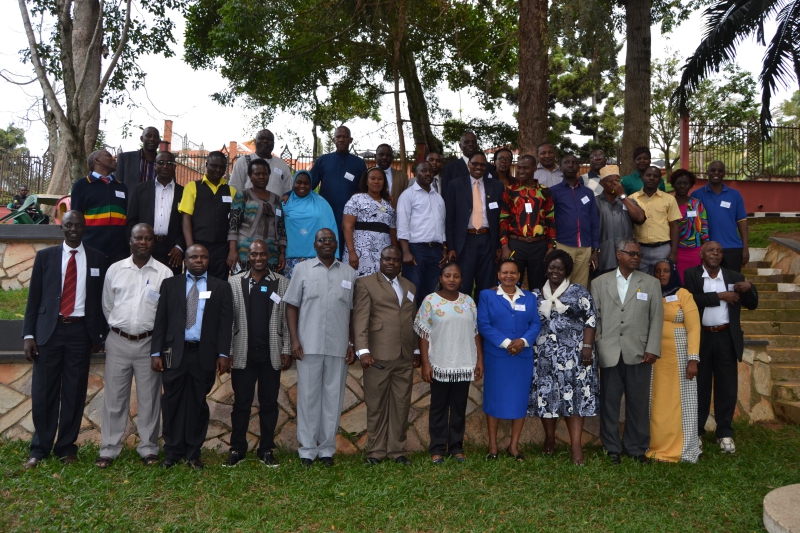
East African Kiswahili Commission; Zanzibar, Tanzania; 20 March 2017: From the 15th-17th March 2017, the East African Kiswahili Commission (EAKC) convened a three-day strategy implementation forum at the Imperial Botanical Beach Hotel, in Entebbe, Uganda.
The meeting brought together stakeholders from EAC Partner States, Kiswahili Associations and the Media to build a common understanding and shared ownership and to facilitate a consensus on the implementation approach to the Commission’s Strategic Plan (2017-2022).
The forum articulated a sequence of investments and activities needed to achieve the mandate of coordinating and promoting the development and use of Kiswahili in regional integration and sustainable development of the East African Community.
Explaining the framework and soliciting their reaction and opinion, the Executive Secretary of the Commission Prof. Kenneth Simala informed participants that road-mapping is considered good planning for successful implementation of the Commission’s strategy.
The forum was, therefore, seen as the beginning of what will be an interactive, collaborative and participatory process between the stakeholders and the management in the implementation of the Strategic Plan for the next five years.
Prof. Simala said that the stakeholders and development partners will have to consider many variables that include a majority agreeing on specific approach to be used in order to realize the intended objectives.
He further challenged the stakeholders to be ready and willing to invest financial and human resources in the implementation of the plan. He thanked Kiswahili stakeholders, more so the EAC Partner States, for taking various practical initiatives to ensure that Kiswahili is developed and used in the service of the Community.
The Commission presented for discussion three priority areas in the roadmap to the implementation plan: Institutional Capacity Assessment of the development and use of Kiswahili in the EAC; EAKC Mobility Policy and Programme; and the production and dissemination of Kiswahili knowledge in the EAC and beyond.
The meeting was informed that the need for the assessment of the development and use of Kiswahili in various institutions in the Community can never be more urgent. The assessment is a prerequisite for understanding capacity development needs imperative in the implementation of the Commission Plan.
Participants discussed and approved a draft Capacity Assessment Manual and Guide developed by the Commission and which will be used in the planned exercise that will culminate in a capacity assessment report showing the status of Kiswahili development and use in various institutions across EAC Partner States.
The stakeholders acknowledged that whereas there has been a phenomenal growth and complexity of the number of institutions involved in the development and use of Kiswahili in the EAC and beyond, there are enormous challenges confronting them and which impact on their roles and effectiveness. There is need, therefore, for Kiswahili stakeholders in the Community to work together amongst themselves and with others elsewhere in the world in order to strengthen joint action to address these and other emerging issues.
The meeting was informed that the Commission had identified mobility as a major pillar of its strategy for dealing with these challenges. Mobility is considered an important element of the mission of the Commission of promoting and coordinating the development and use of Kiswahili for regional integration and sustainable development in the Community. It is for this reason that the Commission is investing in a Mobility Policy and Programme as a framework of strategic partnerships and strong and broad cooperation and as a tool to provide opportunities for Kiswahili stakeholders to interact. The forum approved both the policy and programme developed by the Commission.
The Commission reaffirmed its commitment to provide high quality research driven policy advice to Kiswahili stakeholders, especially Partner States governments. While aiming to be a truly international institution that is firmly rooted in the Community and working closely with Partner States governments, business, society and the public, the Commission intends to play an active role in the integration process and sustainable development agenda as an innovative knowledge institution. Hence, knowledge production and dissemination is crucial to the implementation roadmap.
It is within this context that this year’s first EAKC Conference in Zanzibar, on 6th-8th September marks what promises to be a feature of the Commission’s outreach programme. Themed ‘The Role of Kiswahili in the Transformation of the East African Community’, the Conference has attracted participants from various sectors of society who will critically examine Kiswahili as a resource and tool necessary for the attainment of Sustainable Development Goals. The deadline for receiving abstracts was extended to 31st March, 2017 so as to allow more stakeholders to participate.
The East African Kiswahili Commission (EACK) is an institution of the East African Community based in Zanzibar, The United Republic of Tanzania. The Commission started its operations in May, 2015 and has developed the Annual Operations Plan for 2016-2017. The Commission’s vision is to be the leading body in the promotion and coordination of the development and usage of Kiswahili for regional integration and sustainable development.