EAC trade shows resilience as export growth improves external performance in Q3 2025
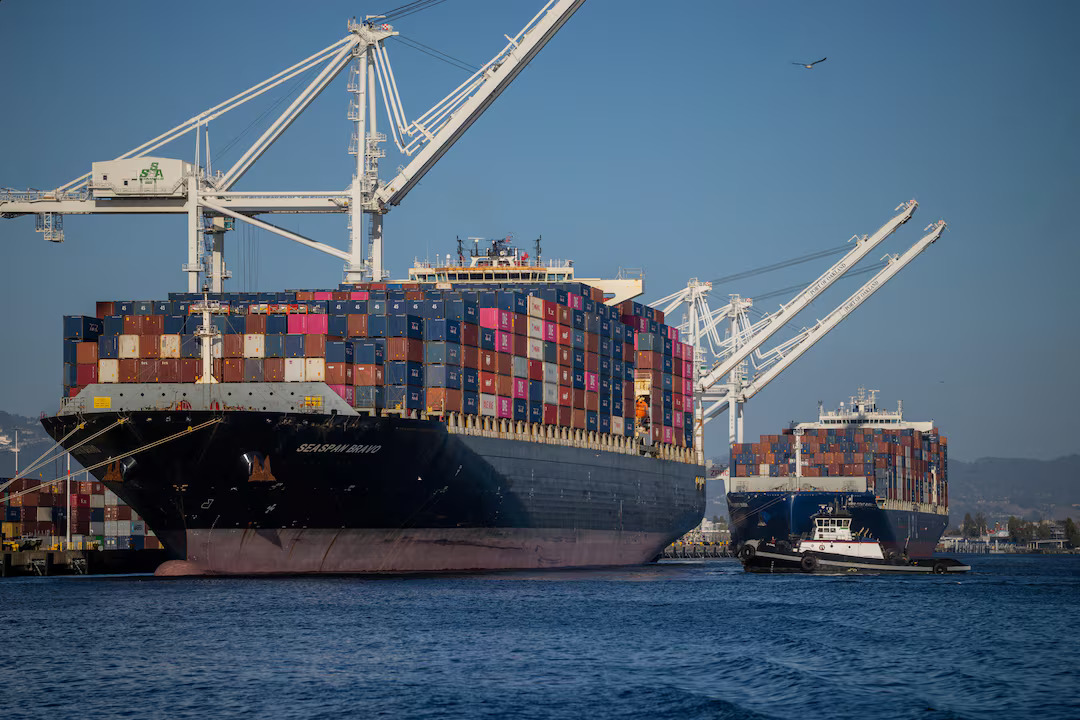
East African Community Headquarters, Arusha, Tanzania, 28th January, 2026: The East African Community (EAC) recorded a strong growth in International Merchandise Trade in the third quarter of 2025, with total trade rising by 21.9 percent to USD 40.3 billion.
According to the latest EAC Quarterly Statistics Bulletin, this expansion was driven by a 32.3 percent increase in exports to USD 19.6 billion, while imports grew by 13.3 percent to USD 20.6 billion, resulting in a narrower trade deficit of USD 1.0 billion, down from USD 3.4 billion in Q3 2024.
According to the EAC Quarterly Statistics Bulletin, trade within Africa remained significant, accounting for 32.2 percent of total trade at USD 10.1 billion, and intra-EAC trade expanded by 15.0 percent to USD 4.8 billion. This reflects continued progress in regional integration and trade facilitation. The significant stable trade contributions from COMESA and SADC further underscores the EAC’s strengthened ties with neighbouring regional economic blocs.
The bulletin notes that the region’s most traded exports are base metals, precious stones and metals, mineral fuels, and key agricultural products. China, the UAE, South Africa, Hong Kong, and Singapore collectively absorbed 58 percent of total exports. On the import side, critical categories such as petroleum products, machinery, vehicles, and cereals continued to support the region’s infrastructure development, industrial activity, and food supply.
Overall, the EAC’s trade outcomes in the third quarter of 2025 reflect a resilient and increasingly diversified regional economy. The reduced trade deficit, growth in export activity, and strengthening intra-African trade underscore a favourable path toward deeper integration and long-term, sustainable growth. The EAC Secretariat continues to prioritise the creation of an enabling trade and investment climate, the promotion of value addition, and the advancement of inclusive prosperity and trade performance across Partner States.
Inflationary Pressures
The EAC Quarterly Statistics Bulletin shows that inflation in the region remained a challenge. The Annual Headline (Year-on-year) Inflation in the EAC region, as measured by the EAC Harmonised Consumer Price Index (EAC-HCPI), stood at 28.3 percent in September 2025 from 24.2 percent registered in August 2025. A year earlier (September 2024), the rate was 14.8 percent.
The annual average headline inflation for the financial year 2024/2025 stood at 23.0 percent, up from 6.6 percent recorded for the financial year 2023/2024, according to the quarterly bulletin. This upsurge was due to increases registered in the Republic of South Sudan and the Republic of Burundi, which stood at 179.4 percent and 34.1 percent, respectively.
The Core (underlying) inflation, which excludes food and energy prices, stood at 18.3 percent in September 2025, down from 21.1 percent registered in August 2025. A year earlier, in September 2024, the rate was 18.6 percent.
According to the Bulletin, the annual average Core (Underlying) inflation for the financial year 2024/2025 stood at 24.4 percent, up from 6.4 percent recorded for the financial year 2023/2024. This increase was due to increases registered in the Republic of South Sudan and the Republic of Burundi, which stood at 185.5 percent and 34.8 percent, respectively.
Monetary Developments and Credit Growth
On monetary conditions, the Bulletin notes that the interest rate developments across EAC Partner States in the third quarter of 2025 were largely aligned, with most countries recording a decline in 91-day Treasury bill rates. Rwanda was the exception, posting an increase of 90 basis points.
According to the bulletin, the Lending rates remained relatively stable, while Deposit rates increased in most Partner States. Interest rate spreads varied across the region, with the Republic of South Sudan recording the highest spread at 13.7 percent, compared to the United Republic of Tanzania’s lowest spread of 6.7 percent.
The Bulletin shows that the growth in broad money supply (M3) moderated to 15.0 percent year-on-year in Q3 of 2025, supported mainly by expanded credit to the private sector, which grew by 13.2 percent. Net Foreign Assets increased by 21.9 percent, indicating improved external positions.
About the Bulletin
The EAC Quarterly Statistics Bulletin is compiled by the EAC Secretariat in collaboration with National Statistics Offices and Central Banks of the Partner States. It provides harmonised data on inflation, trade, money supply and other key macroeconomic indicators to inform policy and planning.
The full Q3 2025 Bulletin is available at: https://eac.opendataforafrica.org/ihrbbkg/statistics-bulletin
For more information, please contact:
Corporate Communications and Public Affairs Department
EAC Secretariat
Arusha, Tanzania
This email address is being protected from spambots. You need JavaScript enabled to view it. / This email address is being protected from spambots. You need JavaScript enabled to view it.
http://www.eac.int
About the East African Community Secretariat:
The East African Community (EAC) is a regional intergovernmental organisation of eight (8) Partner States, comprising the Republic of Burundi, the Democratic Republic of Congo, the Republic of Kenya, the Republic of Rwanda, the Federal Republic of Somalia, the Republic of South Sudan, the Republic of Uganda and the United Republic of Tanzania, with its headquarters in Arusha, Tanzania. The Federal Republic of Somalia was admitted into the EAC bloc by the Summit of EAC Heads of State on 24th November, 2023 and became a full member on 4th March, 2024.